Crafting homemade ice cream is a delightful culinary adventure, offering endless possibilities for custom flavors and fresh ingredients. However, before you dive into a world of creamy concoctions, a crucial decision awaits: choosing between a compressor or a freezer bowl ice cream maker. This choice isn’t merely about brand or color; it dictates your ice cream-making experience, from convenience to consistency. Understanding the fundamental differences between these two popular types is key to selecting the perfect machine for your kitchen and lifestyle. Let’s churn through the details to help you make an informed decision and embark on your journey to frozen dessert perfection.
Understanding Ice Cream Makers
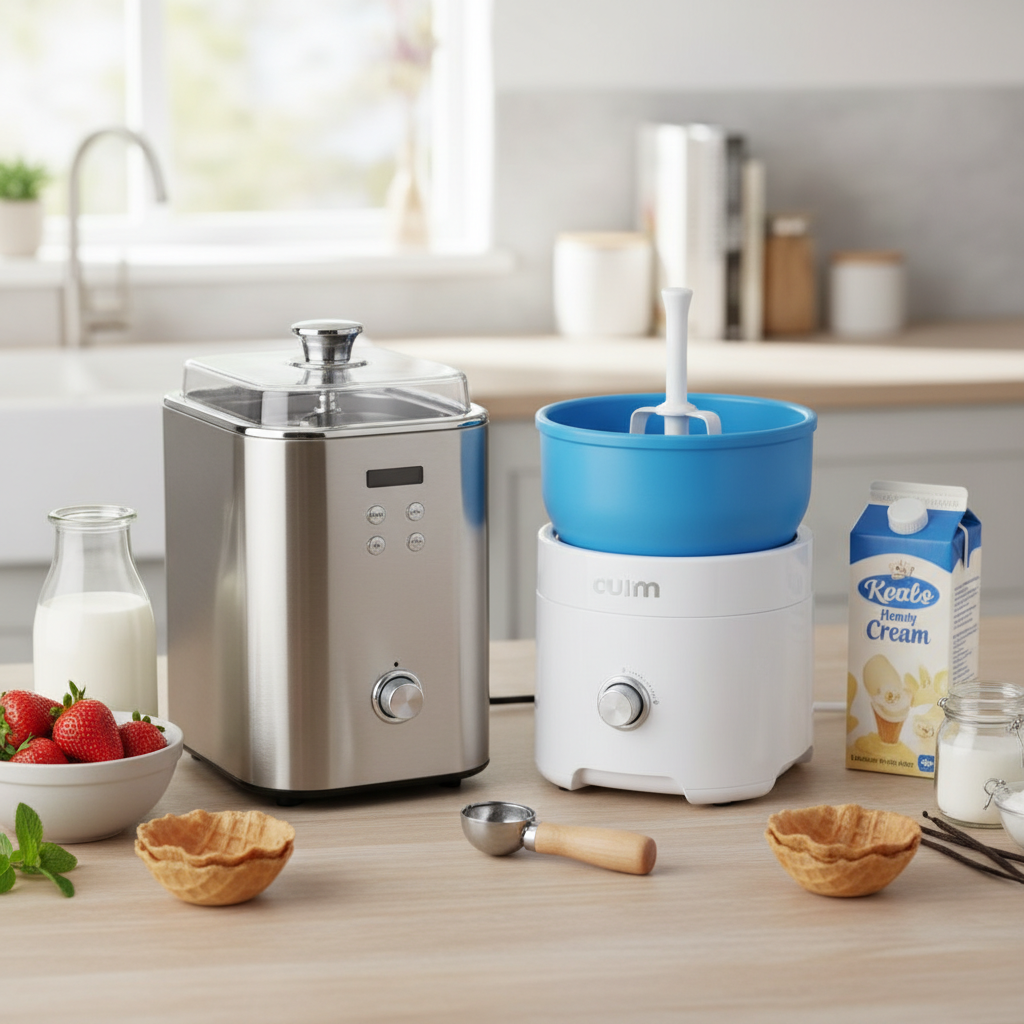
At their core, ice cream makers transform a liquid base—a mixture of cream, milk, sugar, and flavorings—into a frozen dessert through a process of chilling and churning. This continuous motion prevents large ice crystals from forming, resulting in the smooth, creamy texture we all crave. While both compressor and freezer bowl machines achieve this goal, they employ distinct methods to cool your sweet mixture, each with its own set of advantages and considerations.
Compressor Ice Cream Makers: The Self-Freezing Advantage
Compressor ice cream makers, often referred to as self-freezing machines, operate much like a miniature freezer. They feature a built-in refrigeration system that actively cools the churning bowl to freezing temperatures. This integrated compressor eliminates the need for any pre-freezing, offering unparalleled convenience.
Pros of Compressor Ice Cream Makers:
- Immediate Use: No need for overnight preparation. You can whip up a batch of ice cream whenever the craving strikes.
- Continuous Batches: The machine is ready for another batch immediately after the first, making it ideal for entertaining or experimenting with multiple flavors.
- Faster Churning: Generally, compressor models churn faster, allowing you to enjoy your dessert sooner.
- Consistent Results: The active cooling system maintains precise, low temperatures throughout the churning process, often leading to a consistently smoother, creamier texture with smaller ice crystals.
- Advanced Features: Many compressor models come with additional settings, such as different churn speeds or specific programs for gelato or sorbet.
Cons of Compressor Ice Cream Makers:
- Higher Cost: Compressor machines are a significant investment, typically ranging from a few hundred to over a thousand dollars.
- Larger Footprint: They are considerably larger and heavier than their freezer-bowl counterparts, demanding more counter or storage space.
- Less Portable: Due to their internal mechanics, they often require remaining upright and on a flat surface, making them less suitable for frequent moving.
- Noise Level: The operation of the compressor can sometimes be quite noisy.
- Complexity: More built-in components mean a greater potential for mechanical issues, although reputable brands are generally reliable.
|
Our Picks for the Best Ice cream maker in 2026
As an Amazon Associate I earn from qualifying purchases.
|
||
| Num | Product | Action |
|---|---|---|
| 1 | Ice Cream Maker Attachment for KitchenAid, Fits KitchenAid 4.5/5QT & 6QT Mixers, Frozen Ice Cream & Sorbet Gelato Maker, 2 Quart, White |

|
| 2 | Elite Gourmet 4Qt Electric Ice Cream Maker EIM350 Delicious Homemade Ice Cream, Gelato, Sorbet, Frozen Yogurt, 4Qt Aluminum Freezing Cannister, Durable Plastic Ice Bucket, Powerful 50W, Periwinkle |
|
| 3 | Dash My Mug Ice Cream Maker - Makes Single Serving of Gelato, Frozen Yogurt, Sorbet & More - Easy to Clean & Use - Aqua, 2 Bowls |
|
| 4 | Ninja NC301 CREAMi Ice Cream Maker, for Gelato, Mix-ins, Milkshakes, Sorbet, Smoothie Bowls & More, 7 One-Touch Programs, with (2) Pint Containers & Lids, Compact Size, Perfect for Kids, Silver |
|
| 5 | Ninja CREAMi Scoop & Swirl Ice Cream Maker, Soft Serve Desserts, Sorbet, Milkshakes, Frozen Yogurt and More, 13-in-1 Programs, Includes Handle and Two 16 oz 2-in-1 Pints, NC701 |
|
| 6 | Cuisinart Ice Cream Maker, 1.5 Quart Double Insulated, Sorbet and Frozen Yogurt Maker, Ready in 20 Minutes, ICE-21P1, White |
|
| 7 | Nostalgia Electric Ice Cream Maker With 4 Qt Capacity- Old Fashioned Ice Cream Machine Makes Frozen Yogurt or Gelato in Minutes- Vintage Wooden Style Ice Cream Maker with Aluminum Canister- Light Wood |
|
| 8 | Cuisinart Ice Cream Maker Machine, 2-Quart Ice Cream, Sorbet and Frozen Yogurt Machine, Fully Automatic Double-Insulated Freezer Bowl Makes Frozen Desserts in Under 30 Minutes, ICE30BCP1, Silver |
|
| 9 | Nostalgia Electric Ice Cream Maker - Old Fashioned Soft Serve Ice Cream Machine Makes Frozen Yogurt or Gelato in Minutes - Fun Kitchen Appliance - Blue - 4 Quart |
|
| 10 | Cuisinart Ice Cream Maker Machine, 2-Quart Stainless Steel Frozen Yogurt, Gelato, Sorbet, Ready in 20 Minutes, LCD Screen and Timer, ICE-70P1 |
|
Freezer Bowl Ice Cream Makers: The Budget-Friendly Classic
Freezer bowl ice cream makers are a more traditional and budget-friendly option. These machines utilize a double-walled bowl filled with a coolant liquid, which must be pre-frozen in your home freezer before use. The frozen bowl then chills the ice cream mixture as the paddle churns it.
Pros of Freezer Bowl Ice Cream Makers:
- Affordability: These machines are much more economical, making them a great entry point for homemade ice cream enthusiasts.
- Compact Design: The motor base is often small, and the bowl can be stored separately in the freezer, saving counter space.
- Simplicity: They typically have fewer parts and straightforward operation, making them easy to use and clean.
- Lightweight: Being lighter, they are easier to move and store.
Cons of Freezer Bowl Ice Cream Makers:
- Pre-Freezing Required: The most significant drawback is the need to pre-freeze the bowl for 12 to 24 hours, requiring advanced planning.
- Single Batch Limit: You can usually only make one batch per frozen bowl. If you want more, you’ll need additional freezer bowls or wait for the original to refreeze.
- Freezer Space: The bowl itself can be quite bulky and demands dedicated space in your freezer, which can be a challenge for smaller freezers.
- Variable Texture: As the bowl warms during churning, its freezing power diminishes, potentially leading to slightly larger ice crystals and a less consistently smooth texture, especially if the base isn’t sufficiently chilled.
- Slower Overall Process: While churning might be quick, the extensive pre-freezing time makes the entire process slower.
Direct Comparison: Compressor vs. Freezer Bowl
| Feature | Compressor Ice Cream Maker | Freezer Bowl Ice Cream Maker |
|---|---|---|
| Price | High ($299 – $1399+) | Low ($130 – $209) |
| Convenience | High (no pre-freezing, on-demand) | Moderate (requires pre-freezing) |
| Batch Capacity | Multiple, continuous batches | Single batch per frozen bowl |
| Speed | Fast churning, immediate use | Fast churning, but slow due to pre-freeze |
| Consistency | Very high (active cooling) | Good (can vary as bowl warms) |
| Storage | Large, heavy; needs dedicated counter space | Compact, bowl stores in freezer |
| Best For | Frequent users, large families, enthusiasts | Occasional users, budget-conscious |
Factors to Consider When Choosing
Deciding between a compressor and a freezer bowl model ultimately depends on your individual ice cream making habits and kitchen setup.
- Frequency of Use: If you plan to make ice cream frequently, or enjoy making multiple flavors in one session, the convenience of a compressor model is invaluable. For occasional use, a freezer bowl machine might suffice.
- Budget: Your budget will be a primary driver. Freezer bowl models offer an affordable entry into homemade ice cream, while compressor machines are a more significant investment.
- Kitchen Space: Consider both your counter space and freezer space. Compressor machines are large and require a permanent spot, whereas freezer bowls demand ample room in your freezer.
- Desired Features: Do you want advanced settings and consistent results every time, or are you happy with a simpler, more hands-on approach?
- Texture Preference: While both can produce delicious ice cream, serious enthusiasts seeking the absolute smoothest, most professional-grade texture might lean towards a high-end compressor model.
“The true magic of homemade ice cream lies in the quality of your ingredients and the balance of your recipe. While a compressor machine offers unmatched convenience, a well-executed recipe in a properly frozen bowl can yield equally delightful results.”
Mastering Homemade Ice Cream: Tips for Both Machines
No matter which type of machine you choose, a few universal tips will elevate your homemade ice cream:
- Chill Your Base Thoroughly: Always chill your ice cream base in the refrigerator for at least 4 hours, or preferably overnight, before churning. A colder base freezes faster and results in a smoother texture.
- Don’t Overfill: Adhere to the manufacturer’s maximum fill line. The mixture expands as it churns and incorporates air.
- Use Quality Ingredients: Fresh, high-quality dairy, fruits, and flavorings make a noticeable difference in the final product.
- Pre-Freeze Inclusions: If adding mix-ins like chocolate chips or fruit pieces, chill them beforehand to prevent them from warming the ice cream during churning.
- Allow for Hardening: After churning, your ice cream will typically have a soft-serve consistency. Transfer it to an airtight container and freeze for at least 2-4 hours to firm up to a scoopable texture.
Conclusion
The journey to perfect homemade ice cream begins with the right machine. Compressor ice cream makers offer unparalleled convenience and consistent results, making them ideal for avid ice cream makers who prioritize ease and continuous production. However, their higher cost and larger size are important considerations. Freezer bowl models, on the other hand, provide an affordable and compact solution, perfect for occasional use, provided you remember to plan ahead and freeze the bowl. Ultimately, the “better” machine is the one that best fits your budget, kitchen space, and ice cream-making ambitions. So, weigh your options, consider your needs, and get ready to create delectable frozen treats that will delight your taste buds.
Which ice cream maker will you choose to start your homemade dessert adventure?
Frequently Asked Questions
Is a compressor ice cream maker worth the investment?
For frequent ice cream makers or those who desire the convenience of making multiple batches without pre-planning, a compressor ice cream maker is generally worth the investment due to its ease of use and consistent results.
How long does a freezer bowl need to be frozen before use?
A freezer bowl typically needs to be frozen for 12 to 24 hours to reach the optimal temperature for churning. It’s crucial for the bowl to be completely frozen to ensure proper ice cream consistency.
Can I make gelato in both types of ice cream makers?
Yes, both compressor and freezer bowl ice cream makers can be used to make gelato. Gelato recipes often call for slower churning speeds and less air incorporation, which some machines, particularly higher-end compressor models, can achieve with specific settings.
Do compressor ice cream makers make better ice cream than freezer bowl models?
While compressor machines often provide a more consistent and smoother texture due to their continuous freezing power, the quality of ice cream largely depends on a well-balanced recipe and thoroughly chilled ingredients, regardless of the machine type.
What is the typical batch size for homemade ice cream makers?
Most home ice cream makers, both compressor and freezer bowl types, have a capacity ranging from 1 to 2 quarts. This is generally sufficient for a family or small gathering, though compressor models allow for back-to-back batches for larger quantities.