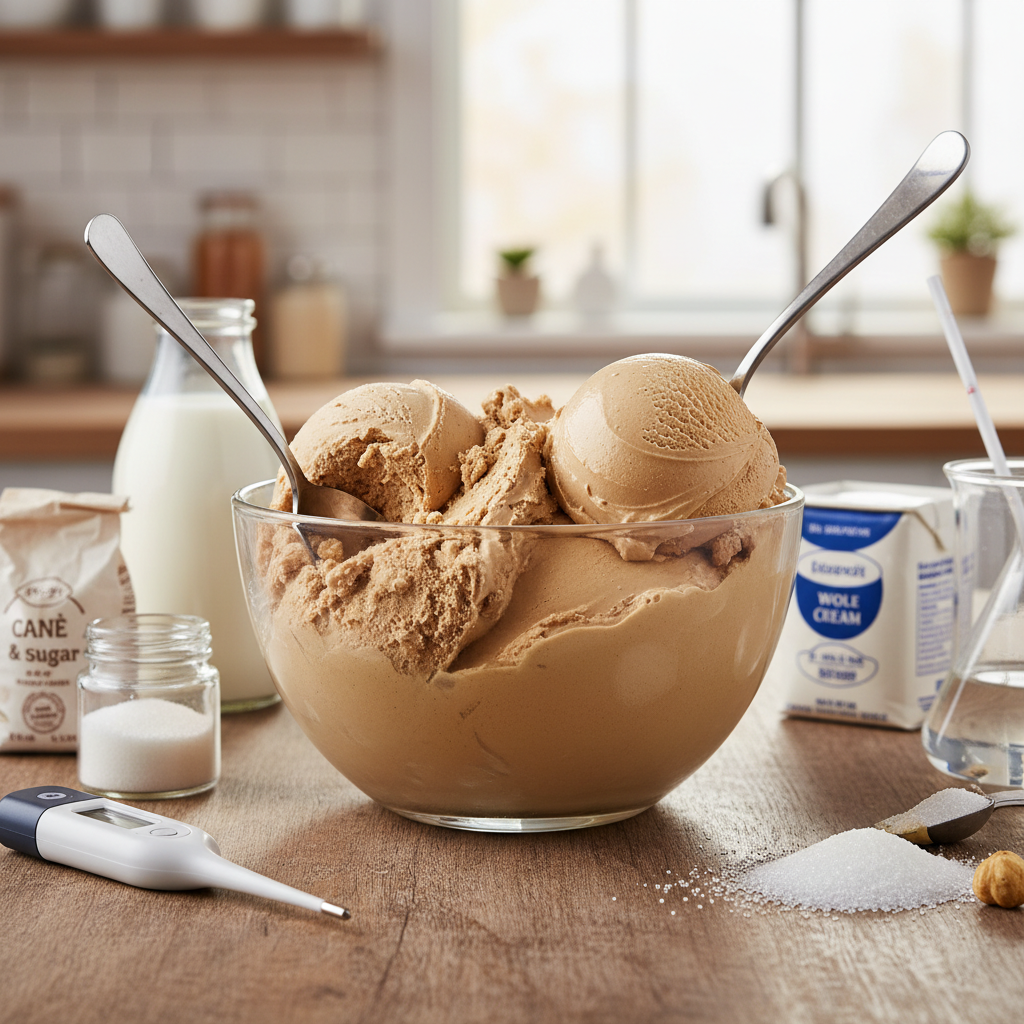
There’s something uniquely satisfying about homemade ice cream, especially when churned in a classic old-fashioned maker. The anticipation, the slow rumble of the churn, and finally, that first taste of velvety, homemade goodness. But achieving that perfect, creamy texture hinges on a secret ingredient that never actually makes it into your dessert: salt. For over a decade, I’ve seen countless batches of ice cream come to life, and I can tell you, choosing the right salt for your old-fashioned ice cream maker is crucial for success. This guide will delve into why salt is indispensable, the best type to use, and how to master its application for the ultimate frozen treat.
Why Salt is Essential for Homemade Ice Cream
At first glance, it might seem counterintuitive to add salt to your ice bath, especially when you’re aiming for a sweet treat. However, the science behind it is fascinating and fundamental to the traditional ice cream making process. This phenomenon is known as cryoscopic depression, or more simply, freezing point depression.
When salt is mixed with ice, it causes the ice to melt. As the salt dissolves into the melting water, it lowers the freezing point of that water. Instead of freezing at 32°F (0°C), the saltwater (or brine) solution can reach temperatures significantly below freezing, often down to 8-12°F (-13 to -11°C) or even colder. This super-chilled brine mixture surrounding your ice cream canister is what draws heat rapidly away from your ice cream base, allowing it to freeze. Without salt, the ice alone wouldn’t get cold enough to properly solidify the mixture, or it would take an excessively long time, leading to larger ice crystals and a less desirable texture. The rapid and consistent cooling facilitated by the salt-ice bath is key to producing ice cream with a smooth, fine texture, free from grittiness.
The Champion: Rock Salt
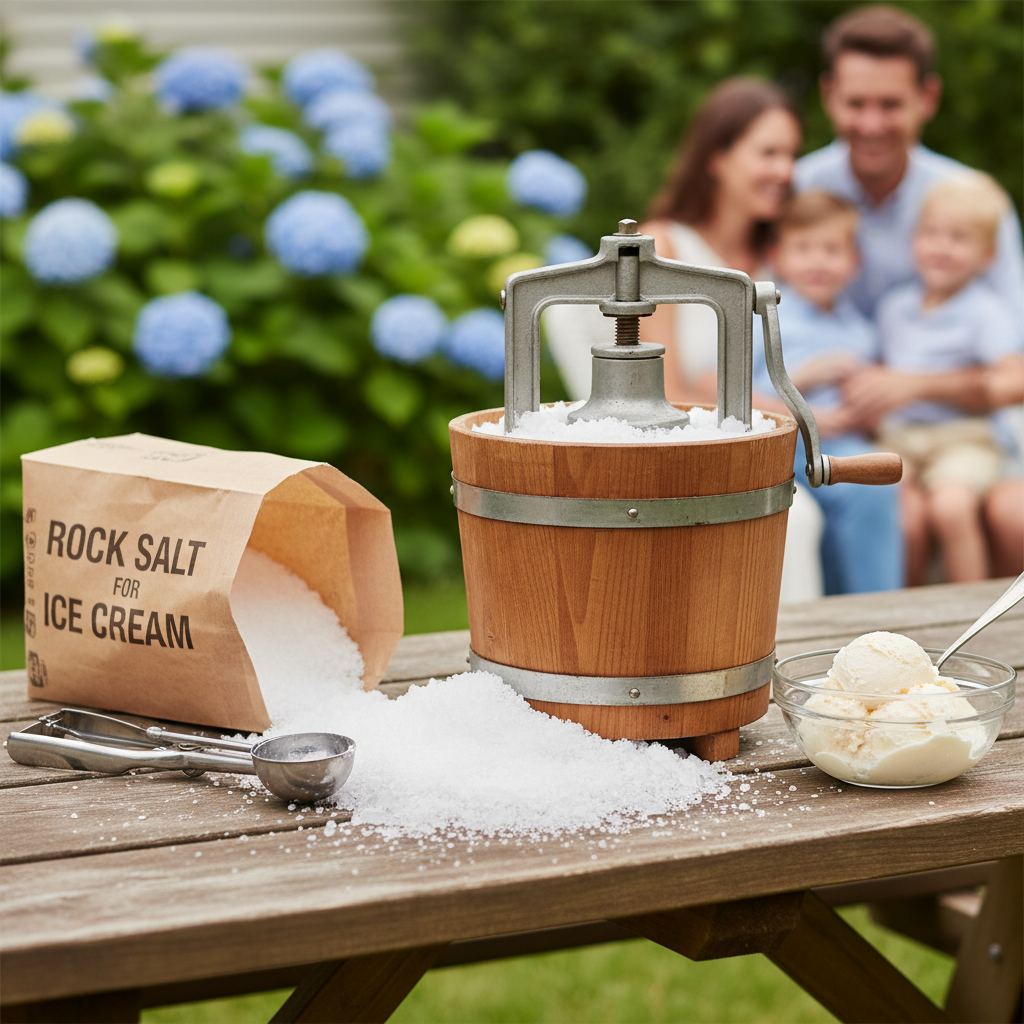
When it comes to old-fashioned ice cream makers, rock salt is the undisputed champion. It’s specifically designed for this purpose and offers several distinct advantages over other salt varieties.
Rock salt, also known as ice cream salt, consists of large, coarse crystals. Its substantial size is beneficial for two primary reasons. Firstly, these larger granules dissolve more slowly in the ice bath, providing a sustained and consistent cooling action. This controlled melting is vital for achieving the ideal freezing rate for your ice cream, preventing it from freezing too quickly (which can result in a coarse texture) or too slowly (which might lead to a spongy or buttery consistency). Secondly, in hand-cranked or motorized bucket-style ice cream makers, the coarse nature of rock salt creates less friction between the outer bucket and the inner canister containing the ice cream mixture. This reduced friction helps the churning mechanism operate smoothly, preventing the bucket from binding up and ensuring efficient mixing. You can typically find rock salt in grocery stores, especially during warmer months, or at hardware stores. Some brands, like Morton, even offer specific “Ice Cream Salt” products, though it’s important to remember these are generally not for consumption, only for the freezing bath.
Exploring Salt Alternatives
While rock salt is highly recommended, sometimes you might find yourself without it. In a pinch, other types of salt can be used, but it’s important to understand their characteristics and potential adjustments needed.
- Kosher Salt: This is often considered the best substitute due to its coarser grain compared to table salt, and it’s typically free from anti-caking agents and iodine. If using kosher salt, you might need to use slightly less than the recommended amount of rock salt, as its smaller crystals will dissolve faster and create a colder brine more quickly.
- Coarse Sea Salt: Similar to kosher salt, coarse sea salt can work as an alternative. Its larger crystals offer a slower dissolution rate than fine salts, mimicking some of rock salt’s benefits. Again, adjust quantities carefully.
- Table Salt: While table salt (fine-grained iodized salt) can technically lower the freezing point of water, it’s generally less ideal for old-fashioned ice cream makers. Its fine crystals dissolve very rapidly, which can lead to the ice cream freezing too quickly and potentially developing an undesirable, coarse texture. Furthermore, the additives often found in table salt (like anti-caking agents) don’t offer any benefit and aren’t necessary for the ice bath. If you must use table salt, you’ll typically need less of it than rock salt, as its surface area allows for quicker dissolution and temperature drop. One experiment even suggested it could harden ice cream at a similar rate to rock salt, but for consistent results and ease of use in traditional machines, it’s not the top choice.
“The secret to perfectly smooth, old-fashioned ice cream isn’t just the recipe; it’s mastering the external freezing environment created by ice and salt. The right salt ensures an optimal, slow chill.” – ReviewDotz Admin, Ice Cream Maker Technician
Perfecting the Salt-to-Ice Ratio
Achieving the perfect ice cream texture involves more than just selecting the right salt; it also requires a balanced ratio of ice to salt in your freezing bath. A common and effective ratio recommended by many experts is 5 cups of ice to 1 cup of rock salt. This proportion helps maintain a consistent brine temperature of approximately 8-12°F, which is ideal for smooth freezing.
Layering Technique:
For best results, layering the ice and salt around your ice cream canister is crucial. Start by adding a layer of crushed ice (about 3-4 inches deep) to the outer bucket. Then, sprinkle a generous amount of rock salt over the ice. A common suggestion is to use about 5 ounces of rock salt or 3 ounces of table salt per layer. Repeat these layers until the bucket is filled to the brim, ensuring the ice cream mixture in the canister is fully surrounded by the ice-salt mixture. Adding a cup of cold water at the halfway mark and again when the tub is full can also help the ice settle and prevent the motor from binding.
Adjusting for Ambient Temperature:
The amount of ice and rock salt needed can vary based on the ambient air temperature. On very hot days, you might need slightly more salt or more frequent additions of ice and salt to maintain the low temperature. It’s recommended not to increase salt usage until you’ve churned for at least 10 minutes and observed the cream firming up. If too much salt is used, the ice cream might freeze excessively fast, forming a crust on the inner can while the middle remains liquid. If this occurs, you can allow the brine to warm up slightly by removing some ice and salt.
Beyond the Basics: Tips for Optimal Ice Cream Making
To ensure your homemade ice cream is nothing short of spectacular, keep these additional tips in mind:
- Keep Salt Out of the Mix: Remember, the salt is solely for the ice bath and should never enter your ice cream mixture itself. Ensure your canister is securely sealed to prevent any accidental contamination.
- Chill Your Mixture First: For the quickest and most efficient freezing, always make sure your ice cream base is thoroughly chilled in the refrigerator for at least 4-6 hours, or preferably overnight, before pouring it into the ice cream maker.
- Don’t Overfill the Canister: Never fill your inner canister more than two-thirds to three-quarters full. The ice cream mixture will expand as it freezes, and overfilling can lead to a grainy texture and overflow.
- Use Crushed Ice: Crushed ice provides more surface area for the salt to interact with, creating a colder brine solution more efficiently than large ice cubes.
- Measure with Non-Metal: Use a glass or plastic measuring cup for rock salt, as salt can potentially pit a metal container over time.
Conclusion
The journey to crafting perfect homemade ice cream in an old-fashioned maker is a delightful one, and at its heart lies the humble yet powerful role of salt. By understanding the science of how rock salt lowers the freezing point of water, creating an intensely cold brine, you unlock the secret to unbelievably smooth and creamy results. While alternatives like kosher salt can suffice, rock salt remains the optimal choice for its controlled melting and friction-reducing properties. Master the ice-to-salt ratio and layering technique, and you’re well on your way to churning out frozen desserts that will delight family and friends. So, are you ready to embrace the tradition and create your best batch of homemade ice cream yet?
Frequently Asked Questions
What is the primary purpose of salt in an old-fashioned ice cream maker?
|
Our Picks for the Best Ice cream maker in 2026
As an Amazon Associate I earn from qualifying purchases.
|
||
| Num | Product | Action |
|---|---|---|
| 1 | Cuisinart Ice Cream Maker, 1.5 Quart Double Insulated, Sorbet and Frozen Yogurt Maker, Ready in 20 Minutes, ICE-21P1, White |

|
| 2 | Elite Gourmet 4Qt Electric Ice Cream Maker EIM350 Delicious Homemade Ice Cream, Gelato, Sorbet, Frozen Yogurt, 4Qt Aluminum Freezing Cannister, Durable Plastic Ice Bucket, Powerful 50W, Periwinkle |
|
| 3 | Dash My Mug Ice Cream Maker - Makes Single Serving of Gelato, Frozen Yogurt, Sorbet & More - Easy to Clean & Use - Aqua, 2 Bowls |
|
| 4 | Ninja NC301 CREAMi Ice Cream Maker, for Gelato, Mix-ins, Milkshakes, Sorbet, Smoothie Bowls & More, 7 One-Touch Programs, with (2) Pint Containers & Lids, Compact Size, Perfect for Kids, Silver |
|
| 5 | Ninja CREAMi Scoop & Swirl Ice Cream Maker, Soft Serve Desserts, Sorbet, Milkshakes, Frozen Yogurt and More, 13-in-1 Programs, Includes Handle and Two 16 oz 2-in-1 Pints, NC701 |
|
| 6 | Cuisinart Ice Cream Maker Machine, 2-Quart Stainless Steel Frozen Yogurt, Gelato, Sorbet, Ready in 20 Minutes, LCD Screen and Timer, ICE-70P1 |
|
| 7 | Cuisinart Ice Cream Maker Machine, 2-Quart Ice Cream, Sorbet and Frozen Yogurt Machine, Fully Automatic Double-Insulated Freezer Bowl Makes Frozen Desserts in Under 30 Minutes, ICE30BCP1, Silver |
|
| 8 | Nostalgia Electric Ice Cream Maker - Old Fashioned Soft Serve Ice Cream Machine Makes Frozen Yogurt or Gelato in Minutes - Fun Kitchen Appliance - Blue - 4 Quart |
|
| 9 | Ice Cream Maker Attachment for KitchenAid, Fits KitchenAid 4.5/5QT & 6QT Mixers, Frozen Ice Cream & Sorbet Gelato Maker, 2 Quart, White |
|
| 10 | Nostalgia Electric Ice Cream Maker With 4 Qt Capacity- Old Fashioned Ice Cream Machine Makes Frozen Yogurt or Gelato in Minutes- Vintage Wooden Style Ice Cream Maker with Aluminum Canister- Light Wood |
|
The primary purpose of salt is to lower the freezing point of the ice, creating a super-cold brine solution around the ice cream canister. This colder solution efficiently extracts heat from the ice cream mixture, allowing it to freeze quickly and evenly into a smooth, creamy texture.
Can I use regular table salt instead of rock salt for my ice cream maker?
While table salt can technically lower the freezing point of water, it’s generally not recommended for old-fashioned ice cream makers. Its fine grains dissolve too quickly, which can cause the ice cream to freeze too fast and develop a coarse texture. Rock salt’s coarser grains ensure a more controlled and gradual freezing process.
How much salt should I use with ice in my ice cream maker?
A widely recommended ratio is 5 cups of ice to 1 cup of rock salt. You should layer the ice and salt around the ice cream canister, repeating until the bucket is full. Adding some cold water can also help the mixture settle and improve efficiency.
Does the salt go into the ice cream mixture itself?
No, the salt should never go directly into the ice cream mixture. It is exclusively used in the outer bucket with the ice to create the cold brine solution that chills and freezes the inner canister containing your sweet dessert.
What happens if I use too much or too little salt?
Using too much salt can cause the ice cream to freeze too quickly, potentially leading to a crusty texture on the edges while the center remains liquid. Too little salt, on the other hand, means the ice cream will freeze too slowly or not at all, resulting in a spongy, buttery, or overly icy consistency.
Where can I buy rock salt for ice cream makers?
Rock salt, often labeled “ice cream salt,” can typically be found in grocery stores, especially in the baking or seasonal aisles. It’s also commonly available at hardware stores, particularly during seasons when outdoor activities like ice cream making are popular.