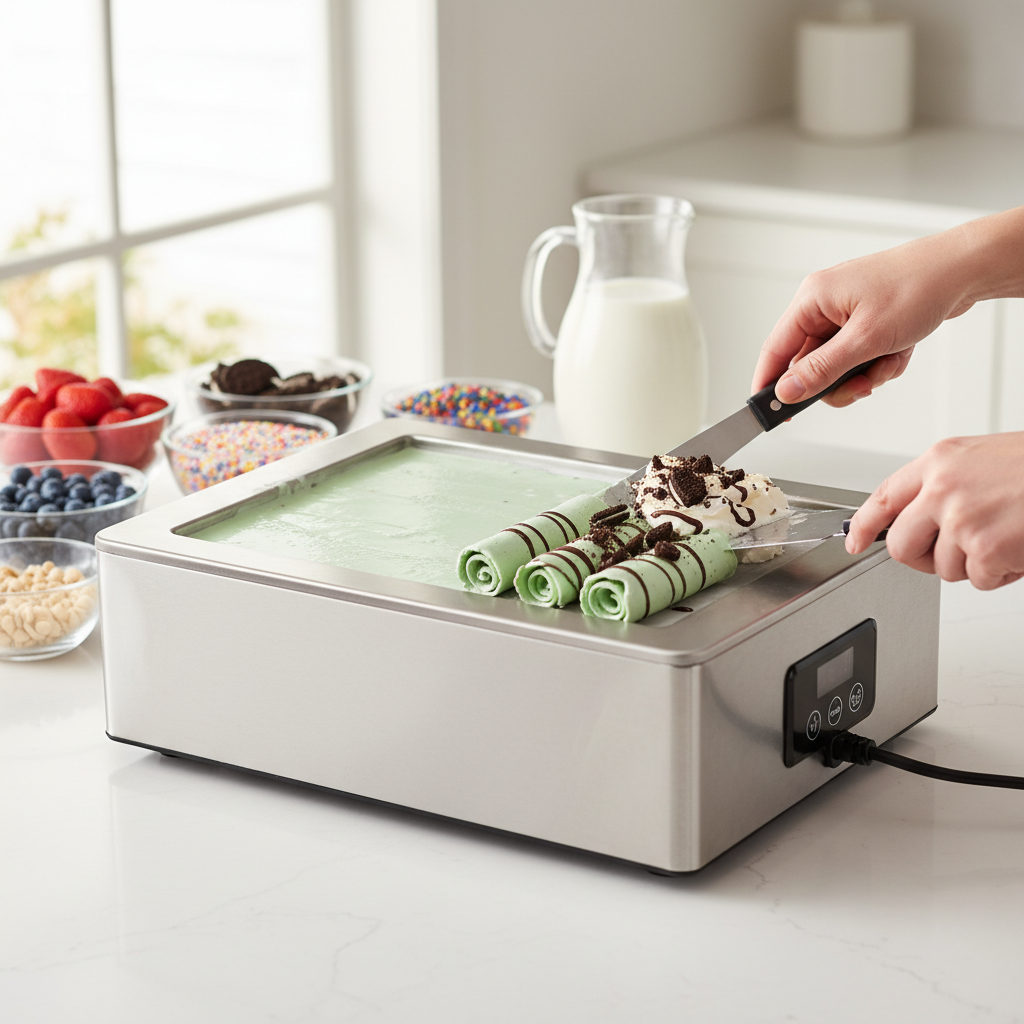
Dreaming of perfectly smooth, scoopable homemade ice cream that stays creamy without turning into an icy block? The secret ingredient many professional creameries swear by is surprisingly accessible for home cooks: guar gum. This natural stabilizer can transform your frozen desserts, preventing those dreaded ice crystals and giving your ice cream that luxurious, melt-in-your-mouth texture you crave. If you’ve ever been disappointed by the consistency of your homemade batches, understanding how to properly use guar gum is a game-changer for your culinary adventures.
Understanding Guar Gum: The Secret to Creamy Ice Cream
Guar gum is a natural carbohydrate extracted from guar beans, widely utilized in the food industry as a thickening and stabilizing agent. For ice cream enthusiasts, its magic lies in its ability to bind water molecules. This crucial function directly combats one of the biggest challenges in homemade ice cream: the formation of large ice crystals during freezing and storage. By preventing these crystals, guar gum ensures a consistently smooth and velvety texture, mimicking the quality of store-bought premium brands. Beyond just smoothness, it also enhances the overall body and mouthfeel of your ice cream, making it feel richer and more substantial. It contributes to greater stability, meaning your ice cream is less prone to separating or developing an unpleasant gritty texture, even after spending extended time in the freezer.
The DIY Method: How to Use Guar Gum Effectively
Incorporating guar gum into your homemade ice cream base is a straightforward process, but precision is key to achieving optimal results without undesirable textures. The general recommendation for home use is a very small amount: typically 0.1-0.3% of the total weight of your ice cream mixture, or roughly 1/4 to 1/2 teaspoon per liter (approximately 1 quart) of base. Starting with the lower end of this range is always advisable.
Here’s a step-by-step guide to integrate guar gum into your next batch:
- Measure Accurately: Since only a tiny amount is needed, using a precise kitchen scale that measures in grams or even a set of measuring spoons for very small quantities (like 1/4 tsp) is highly recommended.
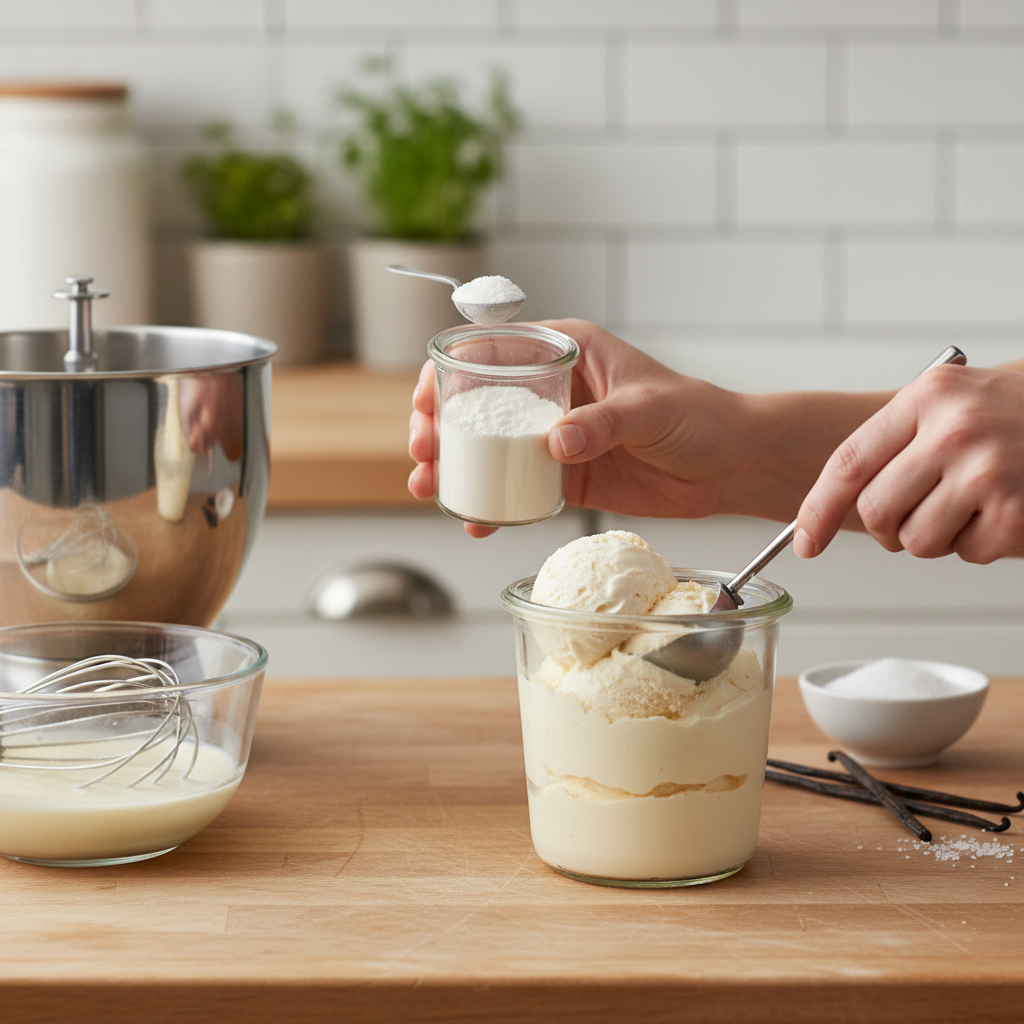
- Dry Mix for Smoothness: To prevent the guar gum from clumping into an unappetizing goo, it’s absolutely critical to mix it thoroughly with a dry ingredient first. Sugar is the perfect companion here. Blend the guar gum powder with a portion of the sugar (or another dry ingredient like cocoa powder, if applicable) that your recipe calls for. This separates the guar gum particles, allowing them to hydrate evenly.
- Gradual Introduction to Liquid: Slowly add your guar gum-sugar mixture to your cold liquid ice cream base while continuously whisking or blending vigorously. An immersion blender works wonders for this step, ensuring a smooth, lump-free integration. The colder the liquid, the better, as this helps delay full hydration until it’s evenly dispersed.
- Heat for Activation (Optional but Recommended): While guar gum can hydrate in cold liquids, gently heating your ice cream base to around 70-80°C (158-176°F) after adding the guar gum ensures complete and efficient hydration, maximizing its stabilizing power. Whisk constantly during heating.
- Chill and Churn: After heating, cool your ice cream base completely in the refrigerator, ideally for several hours or overnight, before churning in your ice cream maker according to the manufacturer’s instructions.
Following these steps will help you unlock the full potential of guar gum, leading to consistently creamy and delicious homemade ice cream.
Troubleshooting and Expert Tips for Guar Gum Success
While guar gum is a fantastic tool for ice cream makers, a few common pitfalls can arise. Understanding these and knowing how to avoid them will ensure your stabilizing efforts are always a success.
- Preventing Clumps: As mentioned, the single most important rule is to always mix guar gum with a dry ingredient first. Never sprinkle it directly into liquid. If you encounter small lumps, a quick blitz with an immersion blender can often smooth them out.
- Too Much of a Good Thing: Overdosing on guar gum is the quickest way to ruin your ice cream. Using too much will result in a chewy, gummy, or even slimy texture, which is far from the desirable creamy consistency. Start with the minimum recommended amount and only increase slightly in subsequent batches if you feel it’s necessary.
- Achieving Full Hydration: If your ice cream still seems to lack the expected stability, ensure your guar gum had enough time and heat to fully hydrate. The gentle heating step (70-80°C) is highly effective for this. If using a no-cook base, ensure vigorous blending for at least a few minutes after adding the gum mixture.
- Storage and Shelf Life: Guar gum not only improves immediate texture but also extends the shelf life of your ice cream by minimizing ice crystal growth during storage. For best results, store your finished ice cream in an airtight container in the coldest part of your freezer.
“Guar gum is a truly powerful ingredient for ice cream, but remember, a little goes a long way. Precision in measurement and thorough mixing are the keys to avoiding a gummy texture and achieving that perfect, smooth scoop every time.”
Guar Gum in Your Favorite Recipes
Guar gum is incredibly versatile and can be seamlessly integrated into most existing ice cream recipes, whether you’re making a classic vanilla, a rich chocolate, or a vibrant fruit sorbet. Its neutral flavor ensures it won’t interfere with the taste profile of your chosen ingredients. When adapting a recipe, simply calculate the appropriate amount of guar gum based on the total liquid volume or weight of your base, then follow the dry-mix and gradual addition method.
For a basic vanilla ice cream, consider a recipe similar to this, integrating guar gum:
Classic Vanilla Ice Cream Base with Guar Gum
- 2 cups (470ml) heavy cream
- 1 cup (235ml) whole milk
- 3/4 cup (150g) granulated sugar
- 1 vanilla bean, split and scraped (or 1-2 tsp vanilla extract)
- 1/4 – 1/2 teaspoon (approx. 0.5-1g) guar gum
Instructions:
- In a small bowl, thoroughly whisk the guar gum with the granulated sugar.
- Combine the heavy cream, whole milk, and vanilla bean (or vanilla extract) in a medium saucepan.
- Gradually whisk the guar gum-sugar mixture into the cold cream mixture until fully dissolved and no clumps remain.
- Heat the mixture over medium-low heat, stirring constantly, until it reaches about 75°C (167°F). Do not boil.
- Remove from heat, cover, and refrigerate for at least 4 hours, or preferably overnight, until thoroughly chilled.
- Remove the vanilla bean (if used), then churn in your ice cream maker according to the manufacturer’s directions.
- Transfer to an airtight container and freeze for at least 2-4 hours to firm up before serving.
Beyond Guar Gum: Other Stabilizers to Consider
While guar gum is an excellent standalone stabilizer for homemade ice cream, it’s part of a broader family of hydrocolloids that serve similar purposes. Other common stabilizers include xanthan gum, locust bean gum (LBG), and carrageenan. Each offers slightly different properties:
- Xanthan Gum: Also a popular thickening agent, xanthan gum can also prevent ice crystal formation. However, too much xanthan can sometimes result in a slightly “slimy” mouthfeel, making precise measurement even more critical than with guar gum.
- Locust Bean Gum (LBG): Often used in commercial ice creams, LBG is highly effective at inhibiting ice crystal growth and contributing to a smooth texture. It often requires heating to fully hydrate, similar to guar gum.
- Blends: Many commercial ice creams use a blend of stabilizers (e.g., guar gum + LBG + carrageenan) to achieve specific texture and melt characteristics. For the home cook, guar gum often provides significant improvement without the complexity of blends.
Guar gum remains an outstanding choice for DIY ice cream making due to its ease of use, relatively low cost, and powerful effect on texture and stability. It’s particularly good at giving ice cream a desirable “body” and chewiness.
Conclusion
Elevating your homemade ice cream from good to truly exceptional is within reach, and guar gum is your secret weapon. By understanding its role in preventing ice crystals and enhancing texture, along with mastering the simple techniques for its precise addition, you can consistently create creamy, smooth, and utterly delicious frozen treats right in your own kitchen. Experiment with small amounts, pay attention to the mixing process, and you’ll soon be enjoying ice cream that rivals your favorite scoop shop. What frozen masterpiece will you stabilize next?
Frequently Asked Questions
What does guar gum do to ice cream?
|
Our Picks for the Best Ice cream maker in 2026
As an Amazon Associate I earn from qualifying purchases.
|
||
| Num | Product | Action |
|---|---|---|
| 1 | Nostalgia Electric Ice Cream Maker With 4 Qt Capacity- Old Fashioned Ice Cream Machine Makes Frozen Yogurt or Gelato in Minutes- Vintage Wooden Style Ice Cream Maker with Aluminum Canister- Light Wood |

|
| 2 | Nostalgia Electric Ice Cream Maker - Old Fashioned Soft Serve Ice Cream Machine Makes Frozen Yogurt or Gelato in Minutes - Fun Kitchen Appliance - Blue - 4 Quart |
|
| 3 | Cuisinart Ice Cream Maker Machine, 2-Quart Ice Cream, Sorbet and Frozen Yogurt Machine, Fully Automatic Double-Insulated Freezer Bowl Makes Frozen Desserts in Under 30 Minutes, ICE30BCP1, Silver |
|
| 4 | Ice Cream Maker Attachment for KitchenAid, Fits KitchenAid 4.5/5QT & 6QT Mixers, Frozen Ice Cream & Sorbet Gelato Maker, 2 Quart, White |
|
| 5 | Dash My Mug Ice Cream Maker - Makes Single Serving of Gelato, Frozen Yogurt, Sorbet & More - Easy to Clean & Use - Aqua, 2 Bowls |
|
| 6 | Cuisinart Ice Cream Maker Machine, 2-Quart Stainless Steel Frozen Yogurt, Gelato, Sorbet, Ready in 20 Minutes, LCD Screen and Timer, ICE-70P1 |
|
| 7 | Ninja NC301 CREAMi Ice Cream Maker, for Gelato, Mix-ins, Milkshakes, Sorbet, Smoothie Bowls & More, 7 One-Touch Programs, with (2) Pint Containers & Lids, Compact Size, Perfect for Kids, Silver |
|
| 8 | Ninja CREAMi Scoop & Swirl Ice Cream Maker, Soft Serve Desserts, Sorbet, Milkshakes, Frozen Yogurt and More, 13-in-1 Programs, Includes Handle and Two 16 oz 2-in-1 Pints, NC701 |
|
| 9 | Cuisinart Ice Cream Maker, 1.5 Quart Double Insulated, Sorbet and Frozen Yogurt Maker, Ready in 20 Minutes, ICE-21P1, White |
|
| 10 | Elite Gourmet 4Qt Electric Ice Cream Maker EIM350 Delicious Homemade Ice Cream, Gelato, Sorbet, Frozen Yogurt, 4Qt Aluminum Freezing Cannister, Durable Plastic Ice Bucket, Powerful 50W, Periwinkle |
|
Guar gum primarily acts as a natural stabilizer in ice cream. It works by binding to water molecules, which significantly reduces the formation of large, undesirable ice crystals during freezing. This results in a much smoother, creamier texture and helps prevent the ice cream from becoming gritty or icy, enhancing its overall quality and shelf life.
How much guar gum should I use for homemade ice cream?
For homemade ice cream, the general recommendation is to use a very small amount, typically between 0.1% and 0.3% of the total weight of your ice cream base. This translates to about 1/4 to 1/2 teaspoon per liter (approximately 1 quart) of liquid. Always start with the lower end to avoid a chewy texture.
Can I add guar gum directly to my liquid ice cream base?
No, it’s crucial to first mix guar gum powder thoroughly with a dry ingredient, such as sugar, before adding it to your liquid ice cream base. This prevents the guar gum from clumping and ensures it disperses and hydrates evenly, leading to a smooth final product.
Does guar gum need to be heated to work in ice cream?
While guar gum can hydrate in cold liquids with vigorous mixing, gently heating your ice cream base to about 70-80°C (158-176°F) after adding the guar gum is highly recommended. Heating ensures complete hydration of the gum, maximizing its stabilizing effects for a superior texture.
What happens if I use too much guar gum in ice cream?
Using an excessive amount of guar gum in ice cream will result in an undesirable texture. Your ice cream might become overly thick, chewy, gummy, or even slightly slimy. It’s essential to measure accurately and start with small quantities to find the perfect balance for your recipe.