There’s a special kind of magic in homemade ice cream, a delight that transcends a simple sweet treat. For many, that magic is inextricably linked to the whirring hum of a vintage Rival ice cream maker. These classic machines, often passed down through generations, offer more than just dessert; they offer a taste of nostalgia, a connection to simpler times, and a unique, creamy texture that modern appliances often struggle to replicate. If you’re considering dusting off an old Rival or acquiring one of these timeless treasures, you’re in for a truly rewarding experience. This comprehensive guide will explore the legacy of Rival ice cream makers, compare them to their modern counterparts, offer tips for buying and using them, and provide essential maintenance advice to keep your vintage marvel churning for years to come.
The Legacy of Rival Ice Cream Makers
The Rival Manufacturing Company, founded in 1932, became a household name synonymous with dependable kitchen appliances. While they produced a wide array of products, their electric ice cream makers garnered particular affection, becoming a staple in many American homes for summer gatherings and family traditions. These machines were built with a straightforward, robust design, emphasizing durability and ease of use in an era before highly specialized kitchen gadgets. Their enduring presence in many homes decades after their manufacture stands as a testament to their quality and the simple, effective engineering that allowed them to consistently produce delicious frozen treats.
Common Types of Vintage Rival Ice Cream Makers
When we talk about vintage Rival ice cream makers, we are primarily referring to their electric, ice-and-salt models. These machines embody the classic method of ice cream making, relying on a simple yet effective thermodynamic principle.
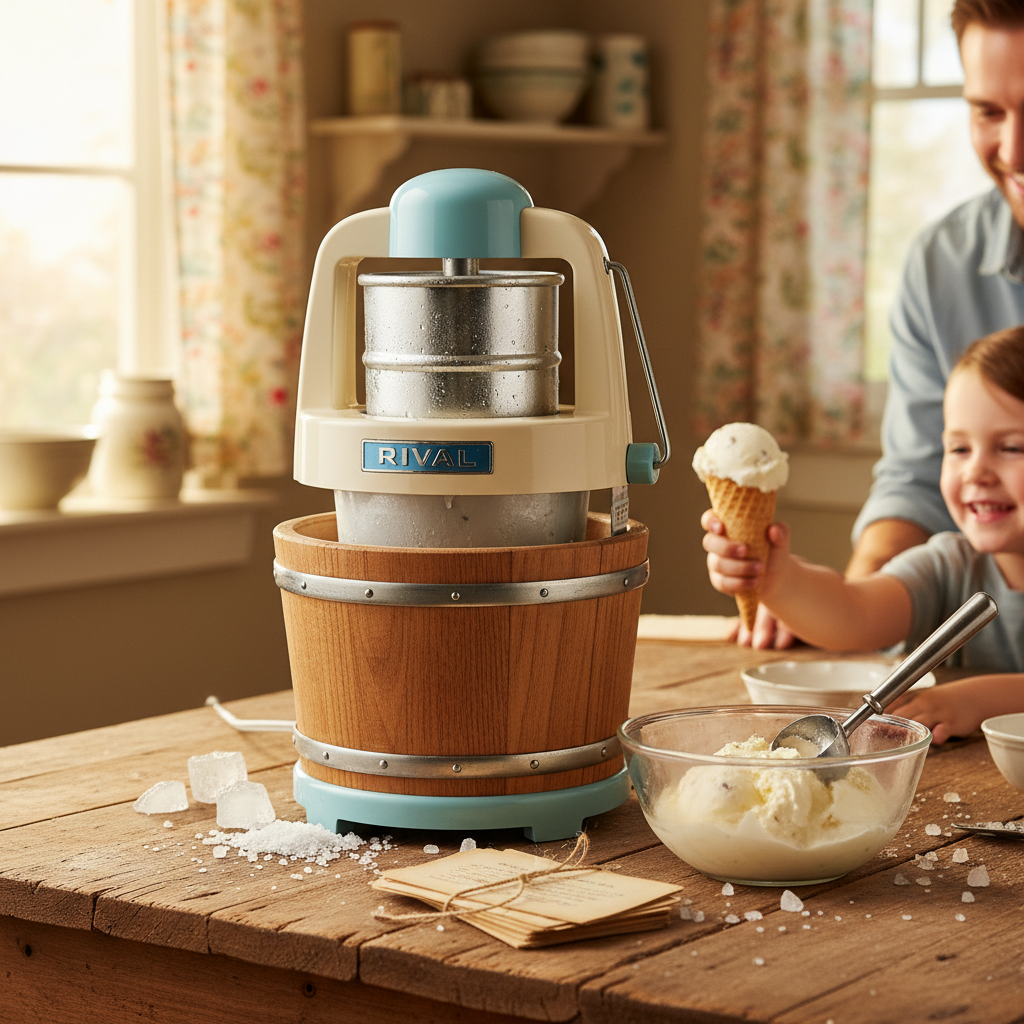
- Electric Ice-and-Salt Models: This is the most common type of vintage Rival you’ll encounter. They feature an electric motor that powers a paddle or dasher inside a metal canister. This canister is then placed within a larger plastic or wooden bucket, which is filled with alternating layers of ice and rock salt. The salt lowers the freezing point of the ice, creating a super-cold brine that rapidly chills and freezes the ice cream mixture as the paddle churns it.
- Capacities: Vintage Rival models typically come in practical sizes, with 4-quart and 6-quart capacities being the most prevalent, perfect for serving a family or a small gathering.
- Materials: The outer buckets were often made of durable plastic or, for a more traditional aesthetic, wood, which also provided natural insulation. The internal canisters were generally metal, designed for efficient chilling.
- How They Work: The motor on top drives the paddle, continuously scraping the freezing ice cream mixture off the cold walls of the canister, incorporating air, and preventing large ice crystals from forming.
Comparing Vintage Rival to Modern Ice Cream Makers
The landscape of ice cream makers has evolved significantly, offering various technologies. Understanding how a vintage Rival stacks up against modern options can help set expectations and appreciate its unique appeal.
- Traditional Charm vs. Modern Convenience:
- Vintage Rival: These machines offer a hands-on experience, often considered part of the fun. The process of layering ice and rock salt, listening to the churn, and anticipating the fresh batch is a nostalgic ritual for many. It’s a method that encourages family participation and creates lasting memories.
- Modern Compressor Models: These self-freezing machines have a built-in refrigeration unit, eliminating the need for pre-frozen bowls, ice, or salt. They offer maximum convenience and are often faster, producing ice cream directly ready for consumption.
- Modern Freezer-Bowl Models: These require the internal bowl to be pre-frozen for 12-24 hours before use. They are simpler than ice-and-salt units, less messy, and generally more compact, though typically with smaller capacities.
- Performance & Texture: Vintage Rival machines excel at producing a creamy, old-fashioned style of ice cream. The constant churning in the ice-and-salt bath results in a smooth, rich texture that is often softer than store-bought ice cream immediately after churning. Many aficionados prefer this “soft-serve” consistency straight from the machine, while others opt to “ripen” it in the freezer for a firmer scoop. Modern compressor machines can often achieve a firmer consistency directly, while freezer-bowl models fall somewhere in between.
- Durability & Longevity: One of the most remarkable aspects of vintage Rival ice cream makers is their enduring quality. It’s not uncommon to find units from decades ago still in perfect working order. Their simpler mechanical design, often with fewer electronic components, contributes to their remarkable lifespan. While modern machines offer advanced features, their longevity can vary, and some may not stand the test of time as robustly as their vintage predecessors.
A Buying Guide for Vintage Rival Ice Cream Makers
If the allure of a vintage Rival has captured your imagination, finding one is the first step on your journey to old-fashioned ice cream bliss.
- Where to Find Them:
- Online Marketplaces: Websites like eBay and Mercari are treasure troves for vintage appliances, where you can often find complete units or individual replacement parts.
- Antique Shops and Estate Sales: These locations can yield fully intact machines, often at reasonable prices, offering a tangible piece of history.
- Family Hand-Me-Downs: The best way to acquire one might be directly from a family member, inheriting a machine with its own rich history.
- What to Look For:
- Completeness: Ensure all essential parts are present: the electric motor, the paddle (dasher), the internal metal canister, the lid for the canister, and the outer bucket (plastic or wood). Missing parts can often be sourced separately, but a complete unit is ideal.
- Condition: Carefully inspect the motor for signs of damage or unusual wear. Check plastic buckets for cracks and wooden buckets for significant warping or rot. Look for excessive rust on metal parts.
- Motor Functionality: If possible, ask the seller to demonstrate that the motor powers on and the paddle mechanism turns smoothly.
- Parts Availability: Be aware that while many parts are available used, they might not always be easy to find for every specific model. Common models tend to have more readily available spares.
- Considerations: The primary driver for purchasing a vintage Rival is often the “nostalgia factor” and the desire for that specific old-fashioned ice cream experience. While the initial cost can be surprisingly affordable, consider that it might require a little more care and effort than a brand-new appliance.
Mastering Your Vintage Rival: Recipes and Usage Tips
Using a vintage Rival ice cream maker is part art, part science, and entirely delicious. Here’s how to get the most out of your classic machine.
- Classic Recipes: The beauty of these machines lies in their ability to make traditional, rich ice cream. Focus on recipes that use a base of milk, cream (often heavy cream and half-and-half for optimal richness), sugar, and your chosen flavorings like vanilla, chocolate, or fresh fruit. These simple ingredients shine when churned slowly in the cold bath.
- Using the Ice & Salt Method: This is crucial for success.
- Layering: Alternate layers of crushed or cubed ice with rock salt (not table salt). A good ratio is typically 6 parts ice to 1 part rock salt.
- Ice Level: Keep the ice and salt mixture high around the canister, ensuring it covers at least two-thirds of the canister’s height. Replenish ice and salt as it melts.
- Churning Time: Most recipes call for churning for approximately 20-40 minutes. You’ll often notice the motor straining or slowing down as the ice cream thickens, indicating it’s nearly ready.
- “Ripening”: For a firmer, scoopable ice cream, transfer the churned mixture to an airtight container and place it in the freezer for several hours (often 2-4 hours, or even overnight) to “ripen” and harden further.
- Troubleshooting Common Issues:
- Motor Slowing Down: This is usually a sign that the ice cream is thickening and nearing completion. It’s not necessarily a problem, but rather an indicator of progress.
- Ice Not Melting Evenly: Ensure the ice and salt are distributed uniformly around the canister. Adding more rock salt can help accelerate melting and super-cooling.
- Soft Ice Cream: If your ice cream is too soft after churning, it likely needs more “ripening” time in the freezer. Ensure your initial mixture was well-chilled before adding it to the machine.
Maintenance and Care for Longevity
Keeping your vintage Rival in top condition is key to enjoying homemade ice cream for years to come.
- Cleaning: After each use, disassemble all parts (canister, paddle, lid, bucket). Wash the canister, paddle, and lid thoroughly with warm, soapy water. The outer bucket can be wiped clean with a damp cloth. Never submerge the electric motor in water; instead, wipe it down with a slightly damp cloth to remove any drips or splashes. Ensure all parts are completely dry before storing.
- Storage: Store your ice cream maker in a dry place to prevent rust on metal components and warping of wooden buckets.
- Parts Replacement: Should a part wear out or break, online marketplaces like eBay are excellent resources for finding used replacement motors, paddles, canisters, and lids for various Rival models. Sears PartsDirect also offers some manufacturer-approved parts and troubleshooting guides, though availability for very old models might be limited.
In a world increasingly dominated by fast-paced technology, the vintage Rival ice cream maker stands as a charming reminder of classic craftsmanship and the simple joy of homemade treats. While modern machines offer convenience, the unique experience and delicious results from a vintage Rival are unparalleled. Its durable design and straightforward operation have allowed these machines to endure for decades, becoming cherished heirlooms. Embracing a vintage Rival is more than just making ice cream; it’s about connecting with a tradition, enjoying a tactile cooking experience, and savoring flavors made with a dash of history. If you’ve never had the pleasure, perhaps it’s time to discover the enduring charm of these classic kitchen companions. What’s your favorite vintage kitchen appliance memory?
Frequently Asked Questions
How long does it take to make ice cream in a vintage Rival machine?
|
Our Picks for the Best Ice cream maker in 2026
As an Amazon Associate I earn from qualifying purchases.
|
||
| Num | Product | Action |
|---|---|---|
| 1 | Cuisinart Ice Cream Maker Machine, 2-Quart Stainless Steel Frozen Yogurt, Gelato, Sorbet, Ready in 20 Minutes, LCD Screen and Timer, ICE-70P1 |

|
| 2 | Dash My Mug Ice Cream Maker - Makes Single Serving of Gelato, Frozen Yogurt, Sorbet & More - Easy to Clean & Use - Aqua, 2 Bowls |
|
| 3 | Cuisinart Ice Cream Maker Machine, 2-Quart Ice Cream, Sorbet and Frozen Yogurt Machine, Fully Automatic Double-Insulated Freezer Bowl Makes Frozen Desserts in Under 30 Minutes, ICE30BCP1, Silver |
|
| 4 | Ice Cream Maker Attachment for KitchenAid, Fits KitchenAid 4.5/5QT & 6QT Mixers, Frozen Ice Cream & Sorbet Gelato Maker, 2 Quart, White |
|
| 5 | Nostalgia Electric Ice Cream Maker With 4 Qt Capacity- Old Fashioned Ice Cream Machine Makes Frozen Yogurt or Gelato in Minutes- Vintage Wooden Style Ice Cream Maker with Aluminum Canister- Light Wood |
|
| 6 | Cuisinart Ice Cream Maker, 1.5 Quart Double Insulated, Sorbet and Frozen Yogurt Maker, Ready in 20 Minutes, ICE-21P1, White |
|
| 7 | Nostalgia Electric Ice Cream Maker - Old Fashioned Soft Serve Ice Cream Machine Makes Frozen Yogurt or Gelato in Minutes - Fun Kitchen Appliance - Blue - 4 Quart |
|
| 8 | Elite Gourmet 4Qt Electric Ice Cream Maker EIM350 Delicious Homemade Ice Cream, Gelato, Sorbet, Frozen Yogurt, 4Qt Aluminum Freezing Cannister, Durable Plastic Ice Bucket, Powerful 50W, Periwinkle |
|
| 9 | Ninja NC301 CREAMi Ice Cream Maker, for Gelato, Mix-ins, Milkshakes, Sorbet, Smoothie Bowls & More, 7 One-Touch Programs, with (2) Pint Containers & Lids, Compact Size, Perfect for Kids, Silver |
|
| 10 | Ninja CREAMi Scoop & Swirl Ice Cream Maker, Soft Serve Desserts, Sorbet, Milkshakes, Frozen Yogurt and More, 13-in-1 Programs, Includes Handle and Two 16 oz 2-in-1 Pints, NC701 |
|
Typically, the churning process takes about 20-40 minutes in a vintage Rival machine. For a firmer, scoopable consistency, the ice cream then needs to “ripen” in a freezer for an additional 2-4 hours or more.
Can I still find replacement parts for old Rival ice cream makers?
Yes, it is often possible to find replacement parts such as canisters, paddles, motors, and lids for various vintage Rival models on online marketplaces like eBay and Mercari, as well as sometimes through specialized appliance parts retailers.
What’s the main difference between a vintage Rival and a modern compressor ice cream maker?
The primary difference is the cooling method. Vintage Rival machines use a traditional ice and rock salt bath around the canister to freeze the mixture, requiring manual ice replenishment. Modern compressor models, however, are self-freezing with a built-in refrigeration unit, offering greater convenience without the need for external ice or pre-frozen bowls.
Is the ice cream from a vintage Rival machine typically soft or hard?
Ice cream made in a vintage Rival machine usually has a soft-serve consistency immediately after the churning process. Many people enjoy it this way, but for a firmer, more scoopable texture, it’s recommended to transfer the ice cream to an airtight container and freeze it for several hours to “ripen.”
Are vintage Rival ice cream makers difficult to use?
While they require a bit more hands-on involvement with layering ice and rock salt compared to modern self-freezing units, the overall operation of a vintage Rival ice cream maker is quite straightforward and follows a simple, time-tested process that many find enjoyable and rewarding.